Commentary: Golf classes? What it really takes to raise a future CEO
SINGAPORE: In the name of giving our children the best start in life and helping them "check boxes", many parents have been signing their young ones up for a wide array of classes.
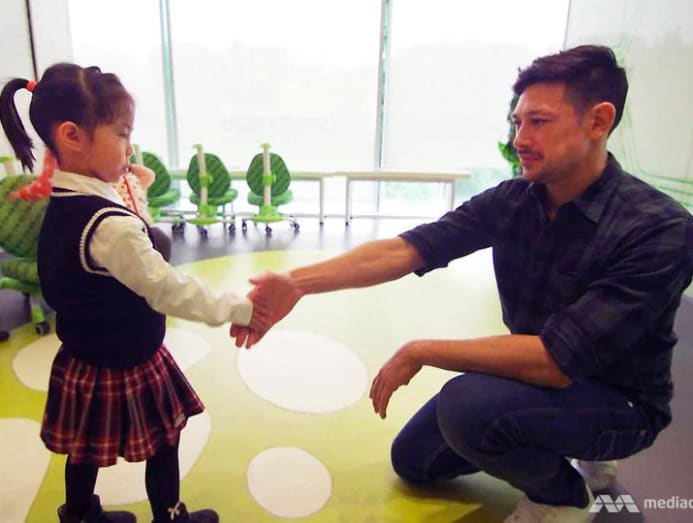
Pianoforte grade 8 exams by the historic period of nine for instance, or the recent trend in People's republic of china of parents sending children to "CEO school" to learn manners and social skills and golf classes said to exist part of critical emotional quotient grooming - all at the tender age of 3.
Is it actually beneficial to pack our kids' schedules with classes, or to cram their young minds with as many lessons and experiences as possible?
Or is there such a thing as too much?
Before jumping onto the latest enrichment fads, mayhap parents should terminate and think: Does my kid really demand to accept another class, and will it add real value to their lives?
Or are these (frequently expensive) lessons really a means for us parents to live vicariously through our children, giving them opportunities that we ourselves never had in our growing years merely perchance wished we had?
HOW EQ IS PICKED UP
At the historic period of three, my own kids were still deep in the throes of the terrible twos. Tantrums and battles were practically a daily occurrence.
We took pains to help them empathize that nosotros all experience big emotions, and that we can use our words or piece of work together to solve the problem.
Withal, it required much time and patience earlier the storm clouds eventually parted. Merely when they did, out emerged slightly more than socialised and eager-to-please pre-schoolers.
EQ can be understood every bit the ability to recognise our feelings, and express them in ways that are socially acceptable and emotionally healthy. Seen to exist equally important as IQ in predicting hereafter success, it includes the power to regulate i's own negative emotions and show empathy towards others.
Credence has a big function to play – acceptance of ourselves, and our emotions and thoughts, while appreciating that others frequently have different needs and feelings.
Fifty-fifty for the most patient and emotionally available parents amongst the states, there are days that get haywire. What nosotros do equally parents when things don't go our way is a fundamental factor in predicting child behaviour.
Children wait up to parents not just every bit authority figures, just likewise models to teach them how to respond to the earth effectually them.
When things become wrong, do we stay calm? Do we address issues constructively or back abroad from dealing with conflict altogether?
Practice we model timeless values such every bit kindness, honesty and self-control? If your child sees you saying one matter, and doing some other, they are going to practise what you did, and not what you said.
Back to the frenzy virtually packing our kids' lives with classes. Since much of the responsibility of raising well-socialised and dependable children falls squarely on parents' shoulders, why bother entrusting this crucial chore to a vendor?
Are nosotros paying for a quick prepare, instead of getting our hands dirty in actively guiding and teaching our young?
Wouldn't it exist ironic if by signing them up for such classes, you actually send them the bulletin that climbing to the top is of paramount importance, regardless of the cost (and I'm not merely referring to the monetary aspect here).
DO CHILDREN REALLY NEED TO Be 'CHARMING CEOS'?
Impeccable manners and charm seem like splendid qualities to inculcate in a child, so it can exist tempting to dish out some coin to reach this event, but is there a flipside to emphasising these qualities at an early age?
In his volume The Hurried Kid, David Elkind expounds on the importance of spontaneous play for children in fostering interpersonal and social smarts. He advises parents to allow their children to be children, and not leapfrog the childhood phase altogether.
Past effectually three years of age, children begin to take turns during play, mimic adult behaviour, and may even evidence concern for a friend in distress. Nearly of the time, they volition choice these social skills up naturally through everyday interactions with other children at the playground and at school.
Play dates are an excellent and depression-cost way to develop these skills; kids learn to converse with their friends, share, negotiate, manage conflict, and make decisions both independently and equally a group.
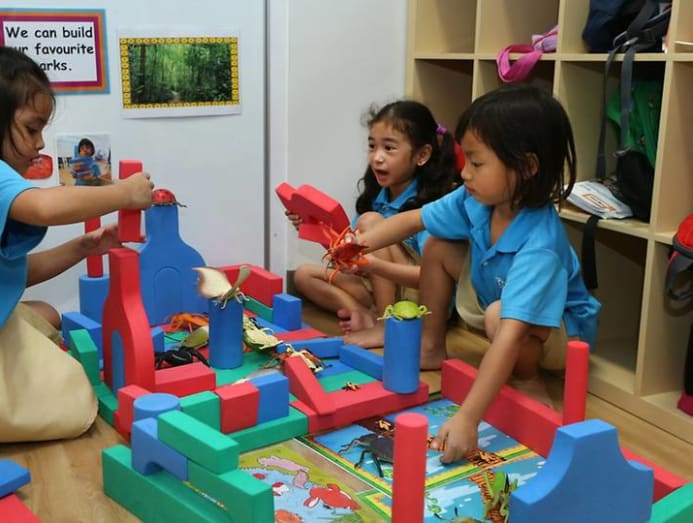
And so is reading a volume and using it to facilitate discussions about the storybook characters, exploring what each feels, and request the kid what they would have done in the protagonist's shoes. Such discussions help to open a child's mind to the perspectives of others, and connect the dots between feelings and actions.
A kid who is taught how to human activity like an adult may non truly experience like an adult. But because they tin can imitate behaviour doesn't hateful they have internalised how to procedure stress or strife.
Emotional maturation is a gradual process that begins in childhood and continues through early adulthood, and requires frequent practice in handling difficult emotions and situations.
Overzealous parents seeking to advance this procedure through external coaching may take to contend with something more sinister in the long run.
Placing pressures on a pre-schooler to perform may pb children to learn to suppress their own child-like desires, instead of agreement how to express them in constructive ways.
Far from feeling accustomed for who they are, the child may instead feel anxious about falling short, particularly when they are placed in novel situations where they have not learned the "script".
Their minds may get distracted from truly learning and enjoying a subject, every bit they are focused on their ain performance and reaching an invisible bar.
Such unnecessary pressures may hinder a child'southward sense of identity, sense of bureau, and willingness to endeavour new things.
EVERYDAY PARENTAL Interest STILL THE Key
Accomplishment in itself is non a bad thing. But we demand to constantly examine our choices and ask ourselves: Is this truly for my child, or is it to fulfil my own dreams?
The things that children really need don't come at a hefty price tag; they include having a strong parent-child bond based on unconditional beloved and acceptance, and open and active communication also equally acceptable diet, slumber and unstructured playtime.
If these foundational needs are non met, everything else volition be built on sand. The external graces and adult-ish mannerisms become temporary frills at best.
If you truly desire to raise a future CEO or high flyer, recognise that the everyday things you do in the home affair.
Giving your child small responsibilities, connecting with them, affirming them when they do well, confronting conflict with courage, and modeling the right values – all of these contribute to building a strong identity, self-esteem and resilience.
More than what external classes can e'er achieve, these are the truthful essentials that volition support your kid in achieving their fullest potential.
June Yong is a mother of three, an educational therapist and possessor of Mama Article of clothing Papa Shirt, a blog that discusses parenting and educational activity in Singapore.
Source: https://cnalifestyle.channelnewsasia.com/singapore/raising-super-kids-future-ceo-parenting-matters-256116
0 Response to "Commentary: Golf classes? What it really takes to raise a future CEO"
Post a Comment